1. WHAT IS GLAUCOMA?
Glaucoma is a chronic disease that makes pressure build-up in the eye. Left untreated, glaucoma eventually destroys the optic nerve completely and this leads to blindness.
EYE DIAGRAM
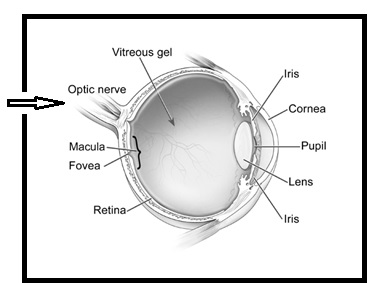
Courtesy of the National Institute of Health, USA.
2. WHAT IS THE OPTIC NERVE? AND WHY IS IT IMPORTANT?
The optic nerve is the main bundle of nerves that carries messages from the eye to the brain. When such messages get to the brain, they are interpreted so we can know what the eye is seeing.
In short, the optic nerve serves as a messenger between the eye and the brain. Without the optic nerve, we cannot see.
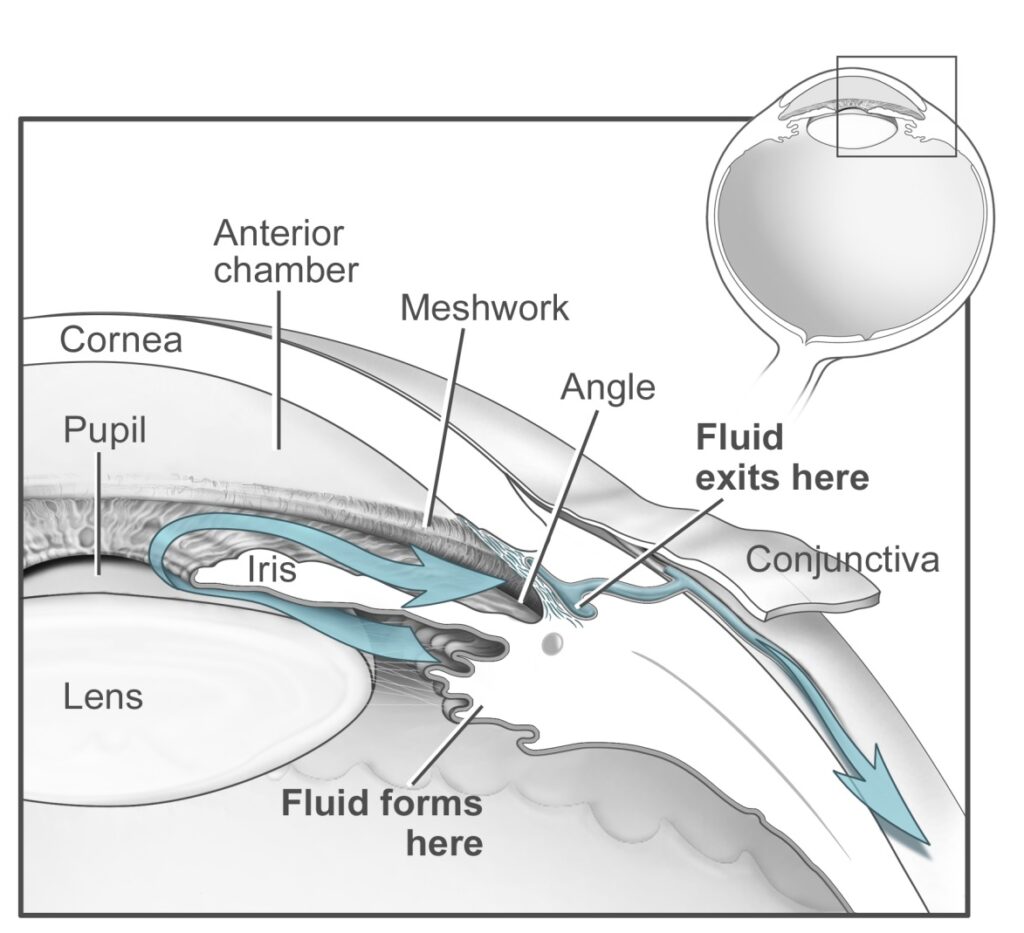
DRAINAGE SYSTEM OF THE EYE
Courtesy of the National Institute of Health USA
3. HOW DOES ONE GET GLAUCOMA?
Nobody really knows. But there are some factors that are associated with getting glaucoma. We call these risk factors.
RISK FACTORS
A risk factor is something that increases the chance of developing a disease. In this case, glaucoma risk factors are things that increase the chance of a person getting glaucoma.
Studies have shown that the following factors increase a person’s chance of getting glaucoma:
1. A family history of vision loss from glaucoma/if someone in your family has or had glaucoma
2. Genetic factor – presence of a recognized gene in the person
3. Presence of systemic cardiovascular disease high blood pressure, strokes, diabetes, etc.
4. Age (the older you get the more likely you are to get glaucoma)
5. High pressure in the eye (high intraocular pressure… this is not blood pressure )
6. Race may also be a factor. African and African origin may be more prone to one type of glaucoma called open angle glaucoma whereas Asians may be more prone to a different type called closed angle glaucoma.
Sources:
AOA: American Optometrists Association
AAO: American Association of Ophthalmologists
AGIS: Advanced Glaucoma Intervention study
EGMT: Early Manifest Glaucoma Trial
If you need help or further information, please contact any eye care clinic or hospital.

ke5vht
dnu13x