“Sight Thief: Why You Might Be Losing Your Vision to Diabetes Without Knowing It!” The case with Diabetic Retinopathy.
Many people with early diabetic eye disease have no symptoms. This topic highlights the insidious nature of the disease and emphasizes the critical need for regular eye exams, even if vision feels fine. It’s a wake-up call that can go viral due to its shocking truth.
Today, we’re diving into a topic that is absolutely critical for anyone living with diabetes, or frankly, anyone who knows someone with diabetes. It’s about something I call the “Sight Thief” – a condition that can slowly, insidiously, and without any warning signs, steal your precious vision.
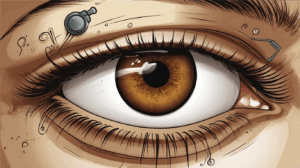
Figure 1: Human eye
Dr. G: We’re talking, of course, about diabetic retinopathy. Now, don’t let the medical jargon scare you off! My job today is to make this crystal clear, to empower you with knowledge, and to show you exactly why this “sight Thief” needs to be on your radar. Because when it comes to your eyesight, awareness is the first and most important step in prevention.
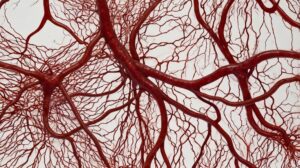
Figure 2: Graphic illustrating tiny blood vessels as can be found in the retina of the human eye.
Dr. G: So, what exactly is diabetic retinopathy? Imagine your eye, specifically the retina, which is the light-sensitive tissue at the back of your eye. Think of it as the film in a camera – it captures everything you see and sends those images to your brain. This amazing retina is nourished by a network of incredibly tiny, delicate blood vessels.

Figure 3: An illustration showing high sugar particles flowing through a blood vessel, bumping into the walls and creating issues.
Dr. G: Now, here’s where diabetes comes in. When your blood sugar levels are consistently high, it’s like a persistent, damaging force against these tiny, delicate blood vessels. Over time, that high sugar can weaken their walls, causing them to bulge, leak fluid or blood, or even become completely blocked.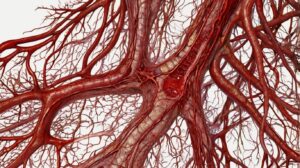
Figure 4: An illustration showing breakage in the blood vessel wall in diabetes
Dr. G: And here’s the truly scary part, the “sight Thief” aspect: In its early stages, diabetic retinopathy often has no symptoms whatsoever. You might not feel any pain, you might not notice any blurry vision, and you certainly won’t see anything physically wrong with your eye. You could be living your life, seeing perfectly fine, while this damage is quietly accumulating in the back of your eye.
Dr. G: Think about that for a moment. No pain, no blurriness, no flashing lights. Nothing to tell you that your most precious sense is being slowly eroded. It’s why so many people are caught off guard when diabetic retinopathy progresses to more advanced stages. By the time symptoms do appear, like blurred vision, floaters, or even patches of vision loss, the damage can already be significant.

Figure 5: A split screen: one side showing a vibrant, clear view; the other side blotchy and dim in parts.
Dr. G: Imagine waking up one day and parts of your world are just… gone. Or hazy. Or distorted. That’s the devastating reality for many who don’t catch this “sight Thief” early. The longer your blood sugar levels are poorly controlled, and the longer you’ve had diabetes, the higher your risk. It’s a cumulative effect, a slow burn that can lead to irreversible vision loss if left unchecked.

Figure 6: Blotchy and blurry vision gradually develops in diabetic patients.
Dr. G: So, what can you do? How do you unmask this “sight Thief”? The answer is simple, yet profoundly important: Regular, dilated eye exams.
Dr. G: When I say “dilated eye exam,” I mean we put special drops in your eyes that make your pupils get really wide. This isn’t just about reading an eye chart; that only tells us about your central vision. Dilation allows me to get a clear, unobstructed view of your entire retina, right to the edges, where those tiny blood vessels are. It’s like opening a wide window into the health of your eye.
Dr. G: During this exam, I’m looking for those subtle signs of damage: tiny hemorrhages, fluid leakage, abnormal blood vessel growth, or swelling in the retina. These are the tell-tale clues that the “sight Thief” is at work, long before you ever notice a problem.
Now,are there inconveniences to a topical drop dilation? The answer is Yes. For one, the dilated eye stays blurry for a few hours. During which time it is impossible to read clearly. Additionally, some people just don’t tolerate the putting of drops inside their eyes. So, for these people, dilation with topical drops was often not a good event.
However, now, for those who couldn’t tolerate drops or those who couldn’t afford to have dilated pupils, as well as for everybody else, there is some very good news.
You may not need to have drops put into your eyes. Technology has helped develop retina cameras and instruments that enable the doctor to have images of the inside of your eye without dilating the pupils. These instruments include retinal cameras and retinal imaging systems, like optomed, optos, polaris, and iCare Eidon.
These technologies use a laser to digitally capture an image of your retina. This is even better than a dilated eye exam because those images offer your eye doctor a more permanent picture of your eye health. And another important aspect of this is that the doctor can refer to to these images during subsequent visits to evaluate yearly changes or monitor progression of many vision conditions.
Dr. G: So, who needs these crucial exams?
- If you have Type 1 diabetes, you should have your first eye exam within 5 years of diagnosis.
- If you have Type 2 diabetes, you should have your first eye exam at the time of diagnosis, because often, Type 2 has been present for a while before it’s discovered.
- And if you are pregnant and have diabetes, listen up – your risk for retinopathy can increase during pregnancy, so very frequent monitoring is essential.
- But for everyone with diabetes, regardless of type, an annual dilated eye exam is non-negotiable. It’s your frontline defense against the “sight Thief.”
Dr. G: I know it can feel daunting to add another appointment to your busy schedule, another medical concern to worry about. But please, hear me on this: your vision is irreplaceable. Once vision is lost due to advanced diabetic retinopathy, it can be extremely difficult, sometimes impossible, to get back.
“Don’t Wait for Symptoms!”
Dr. G: Don’t wait for symptoms to appear. That’s like waiting for the car to break down on the highway before you get an oil change. Be proactive! Schedule that dilated eye exam. Talk to your primary care doctor about managing your blood sugar, blood pressure, and cholesterol – because these all play a role in protecting those delicate eye vessels. And schedule your yearly visits with your eye doctor, insisting on retina evaluations with a dilation or an appropriate imaging system.
Dr. G: Remember, knowledge is power. And in the case of the “sight Thief,” that power translates directly into preserving your sight. So, take charge, get those eyes checked, and let’s keep your vision clear and vibrant for years to come.